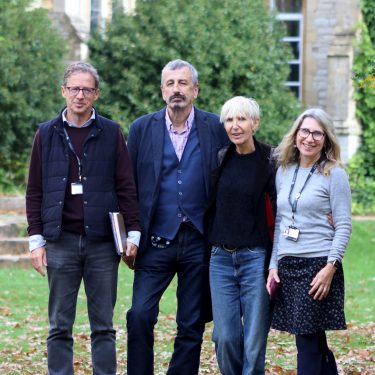
By Beth Brooks, Associate, South-West Social Mobility Commission
Since 2022, the UPP Foundation has funded the University of Exeter to deliver the Exeter Tutoring Model – first as a small but ambitious pilot, and now as a growing national initiative helping universities embed a proven, sustainable approach to university-led tutoring. What began as an experimental idea is growing into a movement: one that is reshaping how universities, students, and schools work together to close educational gaps and widen opportunities.
This blog marks the first in a three‑part series. In this opening piece, Beth Brooks explores the design and delivery of the model and the outcomes it has achieved so far. The second blog will share reflections from a recent visit by Kay Cameron and Darryll Low to tutoring sessions in two Plymouth schools. The final instalment will shift the lens to the student tutors themselves – capturing their insights, motivations, and experiences of delivering the programme.
We hope you enjoy this first instalment.
University-led tutoring has a simple but powerful foundation: the idea that universities are uniquely placed to deliver high-quality, sustainable tutoring to schools- at scale, and at low cost.
At the South-West Social Mobility Commission, partnering with the University of Exeter, that idea has evolved into a structured model now supporting hundreds of pupils, engaging undergraduates for academic credit, and attracting national attention as an exemplar of civic impact.
University-led tutoring is designed not as a temporary intervention, but as a low-cost, embedded, sustainable part of our educational infrastructure.
Design: A “Win-Win-Win” Built for Sustainability
The Exeter Tutoring Model acknowledges that tutoring is one of the best education bets for boosting the progress of pupils, but through experience, we have found that it also benefits student tutors and universities, too.
We describe it as the “win-win-win” model:
- Pupils and schools receive high-quality, structured tutoring, free of charge.
- University students gain real-world experience, academic credit, and professional skills.
- Universities fulfil their civic mission while strengthening the pipeline of future teachers.
The Exeter Model focuses particularly on foundational skills, with courses being developed in literacy, reading and maths, responding directly to widening educational divides. Delivered well; small-group and one-to-one tutoring remains one of the strongest evidence-based strategies for improving outcomes for pupils who are struggling in the classroom.
But impact depends on design.
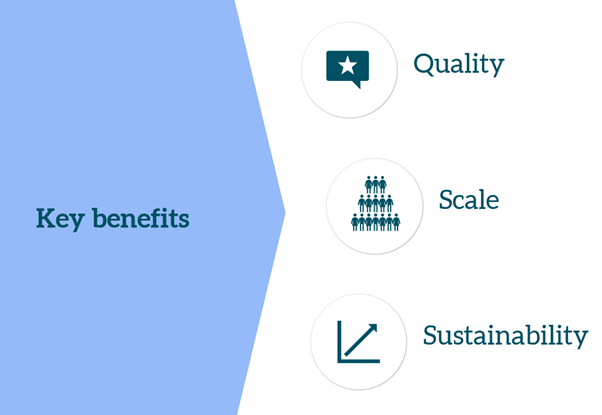
Key features include:
- Fully specified content and pedagogy, developed in partnership with education professionals to ensure consistency and quality.
- High-quality tutor training delivered asynchronously and covering instructional strategies and reflective practice.
- Curriculum embedding, through modules such as Learning for Teaching, where undergraduates gain degree credits for their tutoring work.
- Cost-effective structure, ensuring the scheme incurs minimal cost to universities while remaining free to schools.
Crucially, tutoring is not positioned as volunteering. It is integrated into academic study through a “community learning” approach, enabling students to contribute meaningfully to society while advancing their own education.
Delivery: Partnership, Scale and Infrastructure
The model has moved beyond the pilot stage into sustained delivery.
Tutoring has run at Exeter through the Learning for Teaching module, and will continue after changes to curricula, but the tutoring has also been successfully scaled and delivered and in partnership with UniConnect programmes including:
- Next Steps South West
- North East Uni Connect Programme
- GROWS
In these partnerships, undergraduates serve as trained tutors and paid student ambassadors, working directly with pupils in schools.
Delivery is structured, monitored, and continuously refined. Schools collaborate in identifying pupil need, while university teams ensure tutor preparation and quality assurance. This partnership model has enabled hundreds of pupils to access sustained literacy support.
The approach has also attracted widespread national policy and media attention. Universities UK has highlighted the programme as an exemplar of social mobility work and is committed to promoting it across the university sector.
Alongside delivery, we are developing an “off-the-shelf” toolkit to support embedding undergraduate tutoring across the university system, with the aim of enabling national scale-up.
Outcomes: Literacy Gains, Confidence and Teacher Pipelines
Continuing trials have yielded strong results.
Across participating schools:
- Ongoing evaluation, including comparison-group studies, has shown statistically significant improvements in pupils’ writing, identified as emerging causa evidence by CFE Research.
- Hundreds of pupil tutees improved their literacy levels- with most recent analysis showing a 1.93-point score increase (out of 20).
- Teachers report increased confidence and engagement among pupils receiving tutoring.
- There was an 8-per centage point increase is the proportion of pupils who say they are thinking about going to university.
For undergraduates, the impact is equally significant.
Tutors report overwhelmingly positive experiences, citing:
- That “making a contribution to the local community” as their top motivation for taking part in the programme.
- Strong enjoyment of the programme.
- That the programme helped them develop interpersonal skills.
- In some cases, tutors said that they have a clearer understanding of whether teaching is the right career pathway for them.
One tutor reflected:
“It seems completely counterproductive to have universities full of educated, motivated individuals training to be teachers who are unable to gain actual experience. This tutoring route is the beginning of correcting this wrong.”
Looking Ahead: Embedding and Expanding
Over the next three years, our aims are clear:
- Support more pupils nationwide
- Expand undergraduate tutoring opportunities across multiple universities
- Develop a broader suite of programmes, including secondary reading comprehension and primary reading-for-pleasure initiatives.
- Build a comprehensive toolkit to support adoption across the sector.
- Explore how tutoring can form part of a wider service-learning approach within university curricula.
The long-term vision is ambitious: a regional and national tutoring service embedded within both university and school systems — sustainable, scalable, and mutually beneficial.
You can read the most recent report here.
If you are interested in setting up your own university-led tutoring programme, please contact Beth at b.r.brooks2@exeter.ac.uk
Did you know … that UPP will be out in force at AHUA’s annual conference at the University of Exeter taking place on 20-21 April? Drop by UPP’s stand and come along to hear the much-anticipated preview of the Reverend Cannon Professor William Whyte’s forthcoming report on the student residential model taking place on 20 April 13:50-15:50.