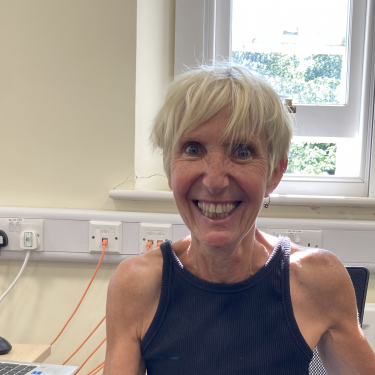
By Beth Brooks, Associate, South-West Social Mobility Commission
In 2023, UPP Foundation began funding the Exeter Tutoring Model, University of Exeter’s pioneering programme that seeks to tackle socio-economic inequalities in GCSE results, and – by association -support efforts to widen access to university. The model trains undergraduate students to tutor small groups of Year 8 pupils in foundational skills. As well as improving pupil attainment, the model also enhances students’ skills and experience, supports universities’ civic agendas, and potentially provides a pipeline of future teachers. Following the initial two-years of funding, UPP Foundation has reinvested in the programme for a further three years via our Growth Fund to support the team’s ambitions in helping other higher education institutions to adopt and embed the model.
In the final instalment of our three‑part series, we hear from student tutors to get their take on the Exeter Tutoring Model in action. You can read the first blog in this series here and the second one here.
University-led tutoring is built on a clear idea: universities have the capacity to deliver high-quality, sustainable tutoring to schools at scale and at low cost. Designed by the South-West Social Mobility Commission at the University of Exeter, this has evolved into a structured model that supports hundreds of pupils, integrates undergraduate learning, and is increasingly recognised for its civic impact.
While evidence and outcomes are critical to understanding the impact of university-led tutoring, the experience of those delivering it is just as important. Student tutors sit at the heart of the model, translating structured content and training into meaningful, day-to-day interactions with pupils.
Evaluations have shown that student tutors not only contribute to pupils’ improved attainment, but also to their increased confidence and a more positive relationship with learning.
The reflections below from student tutors offer insight into how this plays out in practice. They highlight the ways in which tutoring supports pupils, while also demonstrating the developmental value of the model for the undergraduate tutors themselves.
Leon – Arts University Plymouth
My initial motivation to join the Next Steps South West programme (one of South West Social Mobility’s delivery partners) was based on my own interests in pursuing a teaching career, and I felt these part-time shifts would provide a great amount of experience in a teaching environment that I could take part in alongside my studies. The more I have done the tutoring shifts, however, the more I have come to appreciate the unique opportunity it creates for the students, and I have often come away from each lesson feeling fulfilled, as it often seems like the kids have genuinely benefitted from what we are doing. The sessions put the tutors and the schoolkids in a relaxed teaching environment, and allows us to level more easily with them, as they view us as students, not authority figures. I’ve frequently found the kids are unintimidated by the work, and I am able to talk with them casually about the content in a bespoke way that is tailored to how they best learn. This is undoubtedly the most beneficial part for the students, as often it seems the only barrier stopping them understanding the content is that they need individual focus and support, which is what the Next Steps project provides.
Beatriz – University of Plymouth
I chose to take part in CAST* because I think it’s a powerful programme to improve children’s literacy skills and it makes a real impact to their confidence when approaching exams which are so often a cause of stress for them. It also resonated deeply with the past work I’ve done as a music teacher assistant with Y5 students and the mentoring programme I’ve done with Opportunity Plymouth. It is also an opportunity to improve my communication skills, the way I keep my group engaged, and improve teamwork skills by working with other CAST tutors. Overall, it seemed like a lot of fun!
I have loved working with the children in the CAST programme and going to the school first thing in the morning has become one of my favourite parts of the day. The other CAST tutors with whom I work are incredibly kind, capable and hardworking, so being in an environment where I feel supported by the team of tutors and the programme, as well as the kids who are eager to learn the content is an incredible privilege. I can see improvements in the children’s ability to write and understand the key concepts behind sentence structure, and I feel them becoming more comfortable asking questions about anything they are unsure of. This truly brings home the idea that this programme is incredibly effective and that I am working as part of something that will make an important change to children’s academic lives. I love the programme!
Emily – University of Exeter
I wanted to take part as a tutor on this programme as I had previously visited Tor Bridge High for an info fair last year, and I thought that the school was very welcoming. I thought it would be a great opportunity for me to work with a group of their students to hopefully help them improve their grammar as well as boost their confidence in their writing ability and creativity. In addition, thinking back to my school days, I was very appreciative of all my teachers as they shaped who I am today, so I thought it would be a chance for me to try and give back a little and hopefully make a small difference to these children’s education.
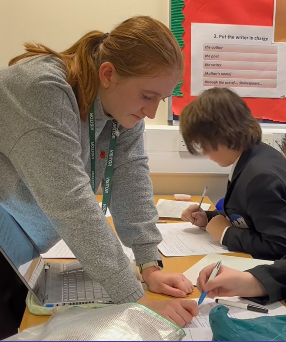
Before the first lesson that I delivered to the students I was a little bit worried as I had not tutored Year 8 before and thought that they might not be interested and engaged in the programme, but this turned out not to be the case at all. In my group, all three students complete the tasks that they are given each week; sometimes they require some prompting but always give it a go or ask questions if they still do not understand. I think including a lot of whiteboard work in the programme is a good learning approach because it keeps them engaged while also allowing them to easily correct any mistakes they make.
In discussion with my tutees last week, I asked them how many English lessons they had each week and what feedback they received. They said they had four lessons each week where they would write about four pages, but they rarely received individual feedback. This means they may be making the same spelling/grammar errors in their writing without realising, so I think they were grateful for the small group sizes and the 1-on-1 feedback they receive through this programme.
Calum – University of Plymouth
I’ve been fortunate enough to have worked this since the first pilot in 2023 and without a doubt it has been a rewarding experience helping students, seeing them develop their confidence in a short space of time. Additionally, it’s been a humbling experience at times. When I have run these sessions, the children are so sharp, they pick up on a lot, it keeps on your toes. In some ways I’ve learnt many things from tutoring, it has made me much more comfortable with leading group work.
The biggest and maybe something I was naïve about is when teaching the delivery of information, people tend to learn at different rates and often process information differently. CAST has been useful in my approach of how I treat information and presentation in my own degree.
When I first started, teaching was not something I considered heavily. The reason I first started is that it sounded like a great opportunity and it was a consistent job alongside university. My opinion safe to say has changed and I’ve greatly appreciated being the opportunity to do things like this.
These testimonials reinforce a key strength of the tutoring model: it’s a ‘win-win-win’. For pupils, small-group support provides the space, attention, and encouragement needed to build skills and confidence. For tutors, the experience develops practical teaching competencies, communication skills, and a deeper understanding of how learning happens, and for higher education institutions, the model provides a way for them fulfil their civic mission while strengthening the pipeline of future teachers.
Importantly, these are not incidental benefits – they are the result of a model designed to integrate tutoring within a wider educational and civic framework. The consistency, structure and partnership underpinning delivery enable tutors to be effective, while ensuring pupils receive high-quality support.
As the model continues to expand, these individual experiences illustrate its broader value. They show how well-designed tutoring can simultaneously address educational disadvantage, support schools, and provide meaningful, credit-bearing opportunities for university students, delivering impact at both an individual and system level.
If you are interested in setting up your own university-led tutoring programme, please contact Beth: b.r.brooks2@exeter.ac.uk
*Crafting Accurate Sentences Tutoring Programme