By Becky Edwards, Senior Lecturer, University of Chichester
In 2019, UPP Foundation funded the early stages of the University of Chichester’s Adversity to University (A2U) Programme. Seven years on, we are delighted to publish a series of three blogs exploring how A2U came into being, how it works, the challenges that have been overcome and what the programme’s research reveals about its impact on participating students. Read the first blog in the series here.
It was a weekend in September just over 8 years ago when my husband and I discovered that a homeless stranger had been sleeping in our campervan parked less than 10 meters from our front door. We threw away the overflowing makeshift ashtrays, collected up the crumpled sheets and gathered together the tiny collection of personal possessions that were all we had to identify our unexpected guest. We left them on our front wall, hoping that they might be collected. And then we packed up and drove away. As though nothing had happened.
Sometimes it is easier to try to forget than to admit what we really feel.
And I tried hard to forget. I tried hard not to recognise how invisible people can become. How someone can be living their whole life right in front of you and you do not notice. Or perhaps that illusion of invisibility is a choice. Perhaps we choose not to see and opt instead for a wilful blindness (Heffernan, 2012) protecting ourselves from the guilt-tinged truth, that we live in an unjust world, where wealth and opportunity are unequally distributed and some of us are luckier than others.
Perhaps we should have felt angry or violated that day. A stranger had been using our van without our permission or knowledge. But it was not anger or violation that I felt. Instead, all I could feel was a deeply disconcerting and unshakeable sadness. As the week went on, I found myself imagining how it must have felt to turn the corner into our road and see an empty space where a temporary home had been. I was haunted by the image of a lonely stranger left to wander the streets once more. There is no turning away from the reality of homelessness. I know that now. And so – for once – I acted.
With a friend, I started volunteering in a local homelessness shelter, cooking dinner once a month. And as we chopped and stirred, we chatted with the residents. They were honest and eloquent, quick-witted and funny. And as we listened, it became clear that often the downward spiral into homelessness had begun when our education system had let them down. When someone they loved or respected: a parent, a sibling , a teacher, made it clear to them that they were “thick,” or “stupid”. If those we trust stop believing in us, how can we believe in ourselves? If those we listen to stop listening to us, how quickly do we start believing that our words are worthless?
As a lecturer, new to academia, I began to wonder if it might not be possible to reverse this cycle; to use education as a way to re-ignite a sense of purpose and rebuild self-belief. Our survival orientated brains are trained to remember bad experiences (Van der Kolk, 2014) and ignore successes. What if higher education could turn memories of failure into successful experiences?
As the residents sitting round the table talked animatedly about the macaroni cheese we had cooked for them, about the way it tasted of comfort and safety, like forkfuls of better times, I began to imagine them sitting in a lecture room, discussing with the same enthusiasm what we mean by critical thinking or debating the impact of taste on our memory. And so the seed for A2U and the bridging course was planted.
I wrote a blog about our man in the van and the miracle of macaroni cheese (A heart-warming story of macaroni cheese) and before I knew it I was talking at the Stonepillow AGM and we were running a workshop at the university for Stonepillow residents. Once again, in the workshop, I was struck by their eloquence, by their engagement, by the speed with which they could link theory to lived experience, by the pleasure they took from the process of learning. “You could go to university,” I told them, “you’ve just had a lecture and you were all great. Everything you said was so interesting. You could give education another try. Here’s my phone number. Message me if you’re interested.” I saw them look at me, uncertain, dubious. I watched their expressions turn from incredulity, to laughter, to hope.
I did not expect anyone to contact me. It is one thing to dream, another to respond.
But the next day 6 people from the course texted me … and Adversity to University was born.
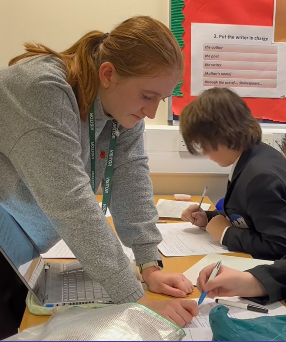
We did not know what to expect. Could not be sure that on the actual day any of them would turn up. But a few weeks later, 10 of them did. Nervous, anxious, disbelieving. But ready to learn. I asked them what had given them the courage to walk through the door.
“We are recovering addicts,” they told me, “and we have all decided that if we are going to be addicted to anything, we would rather it was education.” And so, together with that first cohort, we co-designed the content of a 12-week bridging course. We gave the students ownership of their learning, creating sessions that were relevant and interesting to them: resilience, personal development, why we sleep, the impact of poverty. We based their new learning on their past experience, we gave everyone a chance… and they did not let us down.
That first bridging course was made possible by funding from UPP Foundation, for which we will be forever grateful. And our first bridging course graduates started university the next October. “I was invisible and it made me visible,” said one of them; Wilas. She started a BA (Hons) in Fine Art, graduated with a 2:1, and continued to a masters in law.
Adversity to University is about second chances, about the transformational potential of education to rebuild self-belief and re-shape futures. It has been an extraordinary and humbling journey. It has taught us to be tenacious in our hope and hopeful that change can happen. And we hope it is only just beginning.
References
Heffernan, M (2012) Wilful Blindness. Why We Ignore the Obvious New York, Bloomsbury.
Van der Kolk (2014) The Body Keeps the Score, Mind, Brain and Body in the Healing of Trauma, London, Penguin