This year the UPP Foundation donated to the University of Reading’s new Learning Garden that launched in June. Already the garden has hosted around 500 school children visiting from 6 local secondary schools and 14 local primary schools, as well as 350 community members at the garden’s ‘soft opening’ which formed part of the University’s Community Festival in May. Read on for details of this exciting new initiative.
Read more about this exciting new initiative
To mark its centenary year, the University of Reading created a new outdoor education space located on Whiteknights campus, within the recently restored historic walls in the Harris Garden. This unique space will benefit University students, local school children, and neighbouring community groups, both now and as a legacy for the future.
The University of Reading’s Learning Garden is designed to help people gain a deeper appreciation of the changing natural world. Visitors of all ages can explore educational themes including climate change, biodiversity, hydrology, and food production, and understand how they are all interconnected at a local, national, and global level.
The Learning Garden celebrates the University of Reading’s role as a leading climate science and environmental research institution and will provide a focal point for outdoor learning activities. The project has benefitted from expert input from colleagues across the University who have informed how the Learning Garden incorporates educational content, experimental features, and teaching resources.
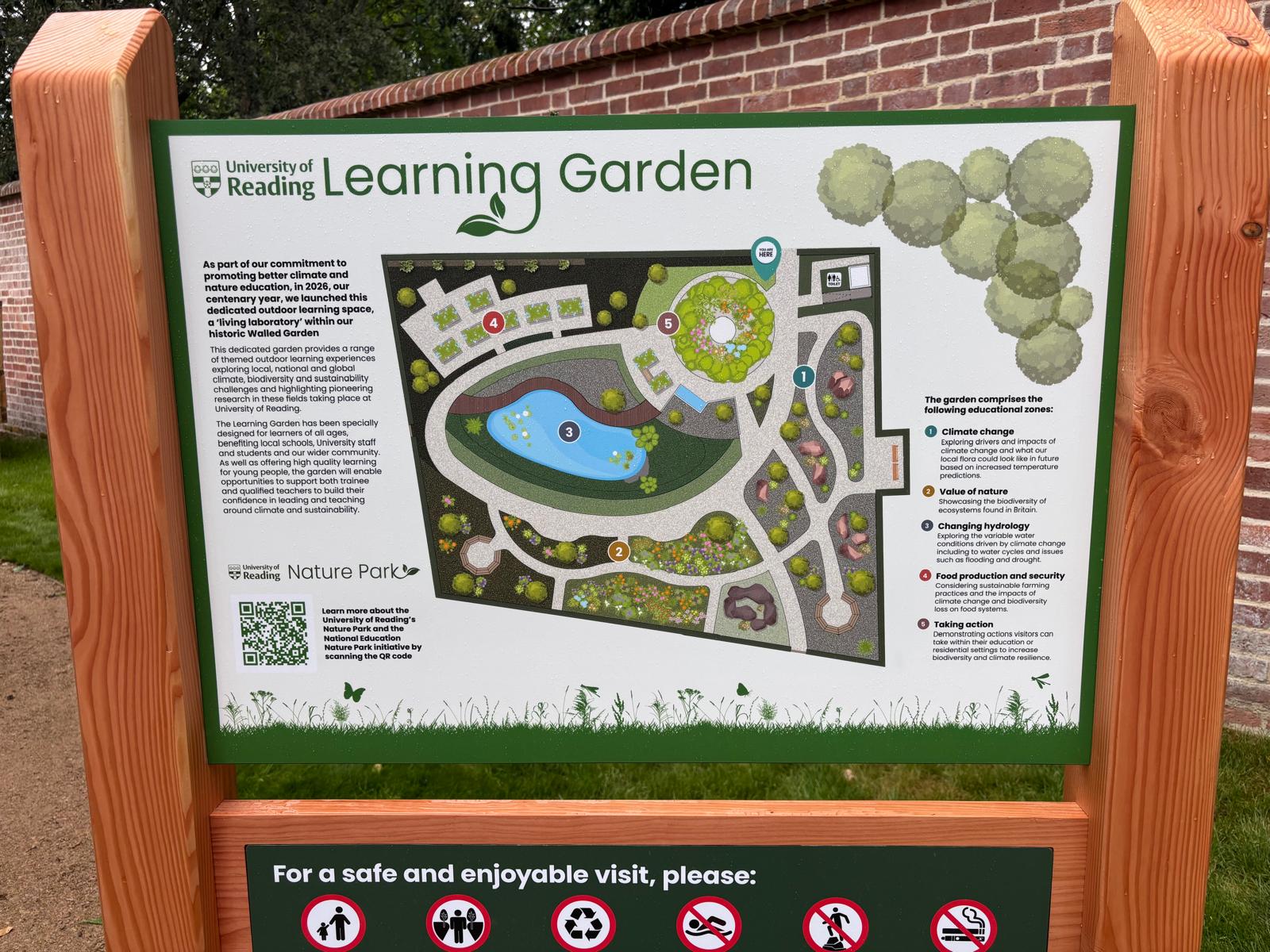
Every element of the Learning Garden has been designed to support flexible learning. The Garden displays 5 key themes about the challenges of climate change and environmental sustainability, in a beautiful natural setting.
- Climate Change – what is driving climate change, how we know that global temperatures are changing, and how technology and renewable energy can provide solutions.
- Changing Hydrology – from droughts to floods: visitors can discover the impacts of variable water conditions in a changing world.
- Food Production and Security – where food comes from, how food is produced and the challenge of providing enough nutritious food to feed the planet.
- The Value of Nature – highlighting the range of flora and fauna found in different environments in the UK. Visitors can explore the challenges for these habitats, and what they can do to support and protect biodiversity.
- Taking Action – where visitors can be inspired to improve their own school, grounds, or gardens at home.
For Local Schools
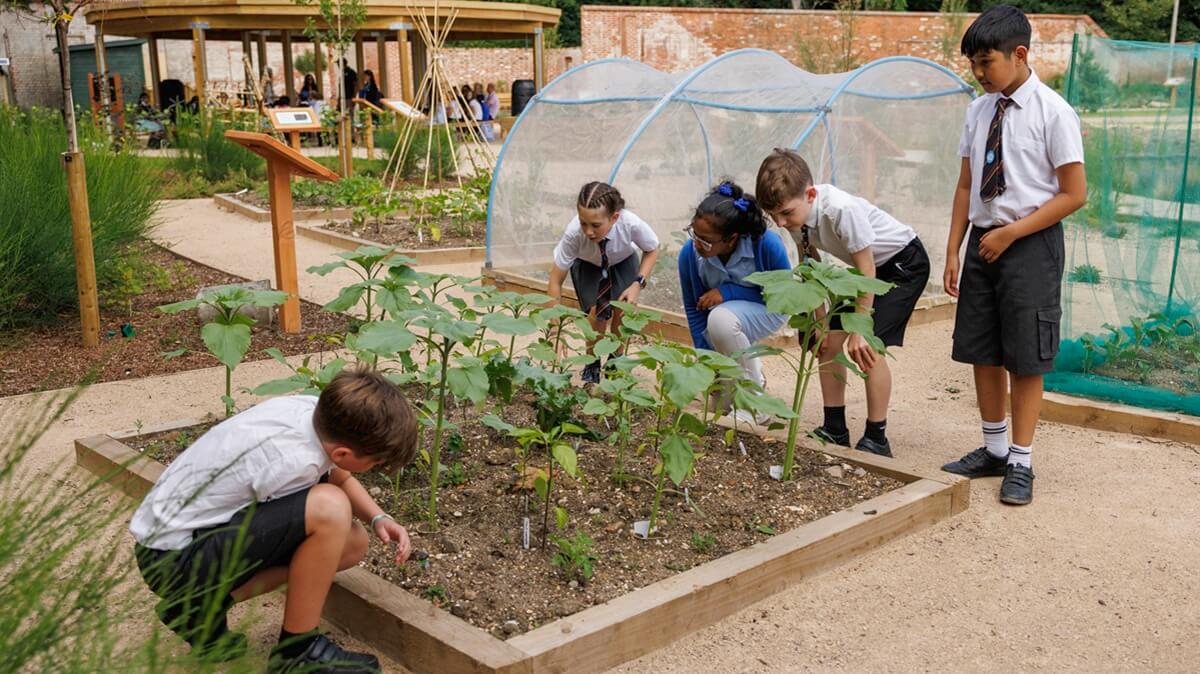
The garden provides opportunities for local schools to enjoy outdoor education activities linked to the National Curriculum. Primary and secondary school children will be able to choose from a range of educational topics which will help them to build a connection with nature through discovery and learning. Sessions also support early years pre-school learning, further education for students aged 16 and above, and Special Educational Needs.
The garden provides a space where pupils can develop skills such as habitat mapping and species identification. They can gain firsthand experience of conducting practical tasks and fieldwork which may be unavailable at their own school sites due to lack of green space. The garden also showcases ideas for enhancing biodiversity and climate resilience to inspire young people to changes their own school environments and homes and create new or improved green spaces.
For the Community
The Learning Garden is a bookable space for community groups to use and enjoy, free of charge. Youth groups, charities, and other community organisations have opportunities to access the garden so their members can connect with nature, enjoy spending time outdoors, and engage in lifelong learning opportunities. Being outdoors can also improve physical and mental wellbeing, providing a healthy environment for gatherings.
For University Students
The garden provides a teaching environment where students from a wide variety of academic disciplines can learn and participate in research. Biological sciences, geography and environmental sciences, humanities, and agriculture students will use the garden as part of their taught undergraduate and postgraduate modules.
It is a flagship facility for Institute of Education trainee teachers, where they can acquire the skills and confidence needed to deliver outdoor education to the next generation.
For a virtual tour of the garden please click on the below link:
Philanthropy
The Learning Garden was one of the flagship Centenary Fund projects and our Fundraising team reached out to hundreds of people and organisations – applying for grants and asking for contributions of all sizes. Donations transformed the project from an idea into a reality, paying for things like the teaching shelter, the pond, planting, and signage.
Fundraising will continue for the rest of the centenary year and beyond, with more money needed for the maintenance and further development of the Learning Garden allowing the delivery of free education sessions for all.