By Rosie Tressler OBE (CEO of Student Minds)
It’s been 10 years since UPP Ltd. launched the UPP Foundation, marked by the Foundation’s first grant to Student Minds, the UK’s student mental health charity.
In November 2015, members of the UPP and Student Minds’ leadership teams met above a little cafe to share our hopes for the future about the mental health and wellbeing of students and the university community. Back then, there was less policy focus on a topic which is today widely recognised as being critical to a thriving student and HE community.
To begin with, our partnership started in UPP’s backyard, focused on what we could learn about the role of student accommodation in supporting wellbeing.
Student Living
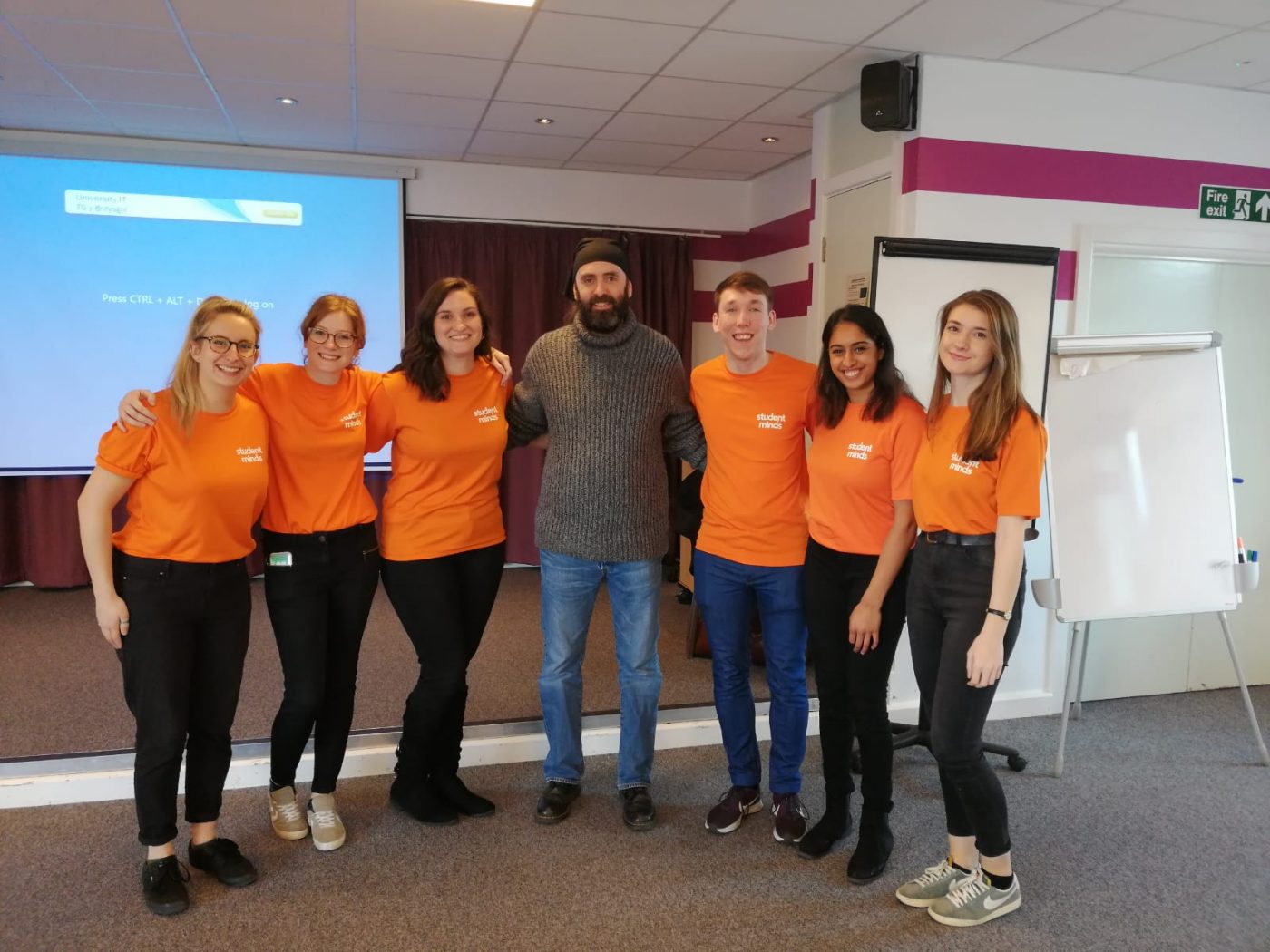
In 2016, supported by a grant from the UPP Foundation of £55K, Student Minds kickstarted the Student Living Project.
The team interviewed over 20 staff in student accommodation at Nottingham Trent University and UPP’s NTU site about their experiences. Staff explained that they wanted to better identify issues affecting students early, and provide support in a professional and approachable way, whilst looking after their own wellbeing and boundaries. Based on these insights, the team designed a training programme which was piloted to over 120 staff and over 60 student representatives at Nottingham Trent University. The training built their understanding of issues students’ faced and empowered them with the skills to signpost students to local professional support. In the initial pilot, staff reported a 34% increase in their knowledge of issues faced by students and signs they are struggling and a 49% increase in understanding referral pathways.
Building on the success of this pilot, both our organisations were eager to share our learning more widely for the benefit of the wider student accommodation sector in the UK. We did two things. First, we generalised our training, making it available to other accommodation teams across the UK. In the several years since we’ve also trained up over 300 staff in the student accommodation sector across the UK on the Living Well training programme which has since been refreshed and is even CPD accredited. Second, we published a policy report and toolkit based on a review of wider available literature. The toolkit covered topics including an outline for conducting an audit, how to support students to disclose issues, ideas for community building and a framework to help PBSA’s develop their own workplace wellbeing strategies. In the first 6 months alone, the report was accessed online by over 1,294 individuals and shared with over 250 student accommodation colleagues. This includes spreading the word internationally at the International Association of Youth Mental Health conference.
University Mental Health Charter
After the success of the Student Living project, we regrouped to consider where we could next make a significant impact together, on an even larger scale. We discussed the seed of an idea that Student Minds had been hoping to launch for some time, if an aligned funder came along. That idea was, at its core, about how we could fundamentally improve the culture within higher education. We wanted universities to feel confident in taking a strategic approach to mental health and to improve continually. We wanted to ensure that there was long-term accountability for the sector, so that even when times are tough, progress continued. That idea was the University Mental Health Charter Programme and Award.
The start-up funding of £100K from the UPP Foundation enabled Student Minds to establish the foundations for the University Mental Health Charter (UMHC), Programme and Award. To begin with we focused on setting up our project governance with key sector organisations for a truly whole-sector approach, as well as ensuring our core staffing and digital infrastructure for the project was in place. The Foundation’s support then enabled Student Minds to develop a co-production methodology for the development of the UMHC Framework itself, in addition to the design of a pilot assessment process at an initial three universities, the design of a complementary programme of support for universities to help them on their ‘charter journey’, and the development of an impact evaluation framework and sustainability plans for the programme over time.
The period of this grant coincided with the Covid19 pandemic. Even with this to contend with, universities remained committed to drawing on the UMHC Framework to support their strategy, policy and practice, and the programme was even listed as a key part for the government’s Covid-19 mental health and wellbeing recovery action plan. Over the two years of this grant period, a member of the UPP Foundation team at the time (Richard Brabner) participated enthusiastically in the steering group, ensuring UPP continued to play an important role in the programme alongside other sector colleagues. Furthermore, the Foundation’s commitment also supported the project team to secure additional funds from the Office for Students, which led to an even more thorough research and consultation process than we had first envisaged, involving over 2,700 members of the higher education community at our events across the UK.
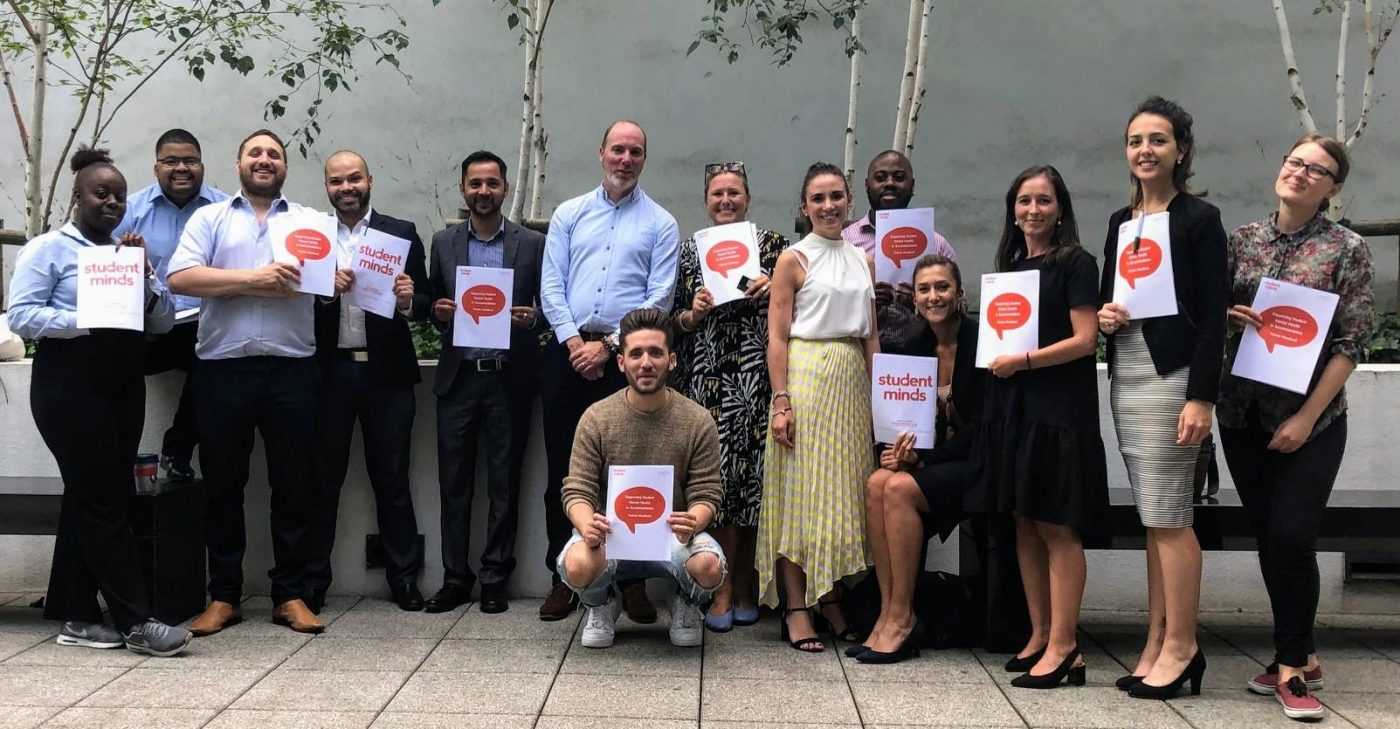
The co-produced UMHC Framework was published in December 2019 and within the first year it had been downloaded over 2,000 times. Since then, it’s become the go-to framework for the higher education sector to understand how to embed mental health and wellbeing in every aspect of university life. The UMHC research team have also since published a plethora of in-depth academic journal articles on university mental health, drawing on the research findings.
Today, over 100 universities are signed up as members of the University Mental Health Charter Programme, and almost 30 have received the prestigious UMHC Award following their rigorous assessment from Student Minds’ Assessor teams.
Aligned to their living Theory of Change, the Student Minds team continues to collect powerful stories about the difference the UMHC is making at each university that is taking part. Every week we hear from colleagues who feel that the UMHC has given the legitimacy and peer support needed for colleagues in HE to push for change. Student representatives tell us that the UMHC has been a primary tool for achieving their campaign priorities in partnership with the university. More and more staff think of mental health and wellbeing at the start of any decision-making process, not as an add-on. And the UMHC impact goes beyond mental health and creating structures that enable wider change – many have kept the cross-university groups they set up as part of the UMHC and embedded as part of formal governance structures. This has enabled better coordination of other priorities in a whole-university approach too (e.g. E6 condition, Disabled students’ commitment).
There are many examples of assessment team recommendations leading directly to positive changes in universities. For instance, the addition of more clinical expertise in support services, the increased resourcing and role of the SU resulting in increased NSS scores, enhanced support structures for student peer supporters and many universities taking a more evidence-informed approach to ensure the safety and effectiveness of mental health support services.
In just eight years, together with students and our university partners we are repeatedly told we’ve created a movement on mental health. Even though the wider context of HE is challenging right now, we are still seeing strong commitment to the UMHC and institutions prioritising their membership and continuous improvements. Registration for the upcoming academic year has just closed, and we’re excited to share the universities that have signed up and renewed their commitment to creating whole-university approaches to mental health and wellbeing on a single year or three-year membership model in Autumn.

Climate Change and student mental health
By the end of the two-year UMHC grant from the UPP Foundation, it was clear its impact was building. The UPP Foundation had also done some innovative work on its Civic University Commitment and was thinking more about the wider impact of institutions. We yet again decided to get back together to discuss – what would be next for our partnership? What did students need from us next?
Students were telling both of our organisations that they were increasingly concerned about climate breakdown. We were hearing this from those involved with campus management as well as from those within the therapy room, but there was a gap in the research. As we’ve done before, we set out to learn more about the relationship between climate breakdown and mental health, starting by listening to students themselves. With a grant of £10,544 we surveyed over 150 students and held in-depth focus groups with 12 – alongside a thorough review of existing literature on the topic.
In 2023, we went on to publish one of the first reports exploring the impact of climate change on mental health in UK higher education. This report invites readers to get curious about the relationship between two of the greatest challenges facing our student population. We explored the role of agency and leadership, the effect of uncertainty, the potential of sustainability in the curriculum, the impact on specific student groups, and the role of universities and government. The report was launched with a webinar watched by approximately 400 individuals hosted by the Higher Education Policy Institute (HEPI) on 18 October 2023, including both Student Minds and UPP as panellists alongside a student from the Students Organising for Sustainability community, and a university Vice Chancellor. The findings certainly gave us all a lot to consider. 71% of our student respondents were quite or very concerned about climate change, and 90% of students said climate change impacted their mental health and wellbeing in the preceding four weeks. Students widely expressed a desire to make a positive contribution to tackling climate change and their civic-mindnesses was a reason for hope. However, they expressed feeling like they didn’t know where to start. It was great to be able to share examples in the webinar of ways students can help tackle the issues whilst benefiting from the effects of this on their own wellbeing. We also shared steps universities can take to facilitate this, such as providing student-led green community initiatives and providing tangible pathways for students to apply their expertise to tackling climate change. We continue to look out for good practice we can shine a light on in the University Mental Health Charter Programme.
What’s next?
It’s certainly been a busy 10 years for our organisations both independently and in partnership. Our three major project collaborations have had a unique, deep and enduring impact for students and the higher education sector, and we expect this impact to increase year on year. During our partnership, the Student Minds team has also appreciated access to additional support from the UPP team through pro-bono strategy sessions and coaching for members of our leadership team, and the UPP Foundation has benefited from Student Minds guidance on working fruitfully with the charity sector too.
Student Minds and the UPP Foundation have done something that is rarely seen across the charity funding landscape. Our multi-year collaboration over ten years shows what can be achieved when organisations work together in a sustained way for the long term and our teams look forward to further collaborations to come.
If you interested in finding out more about Student Minds, please connect with us on LinkedIn, or email hello@studentminds.org.uk.