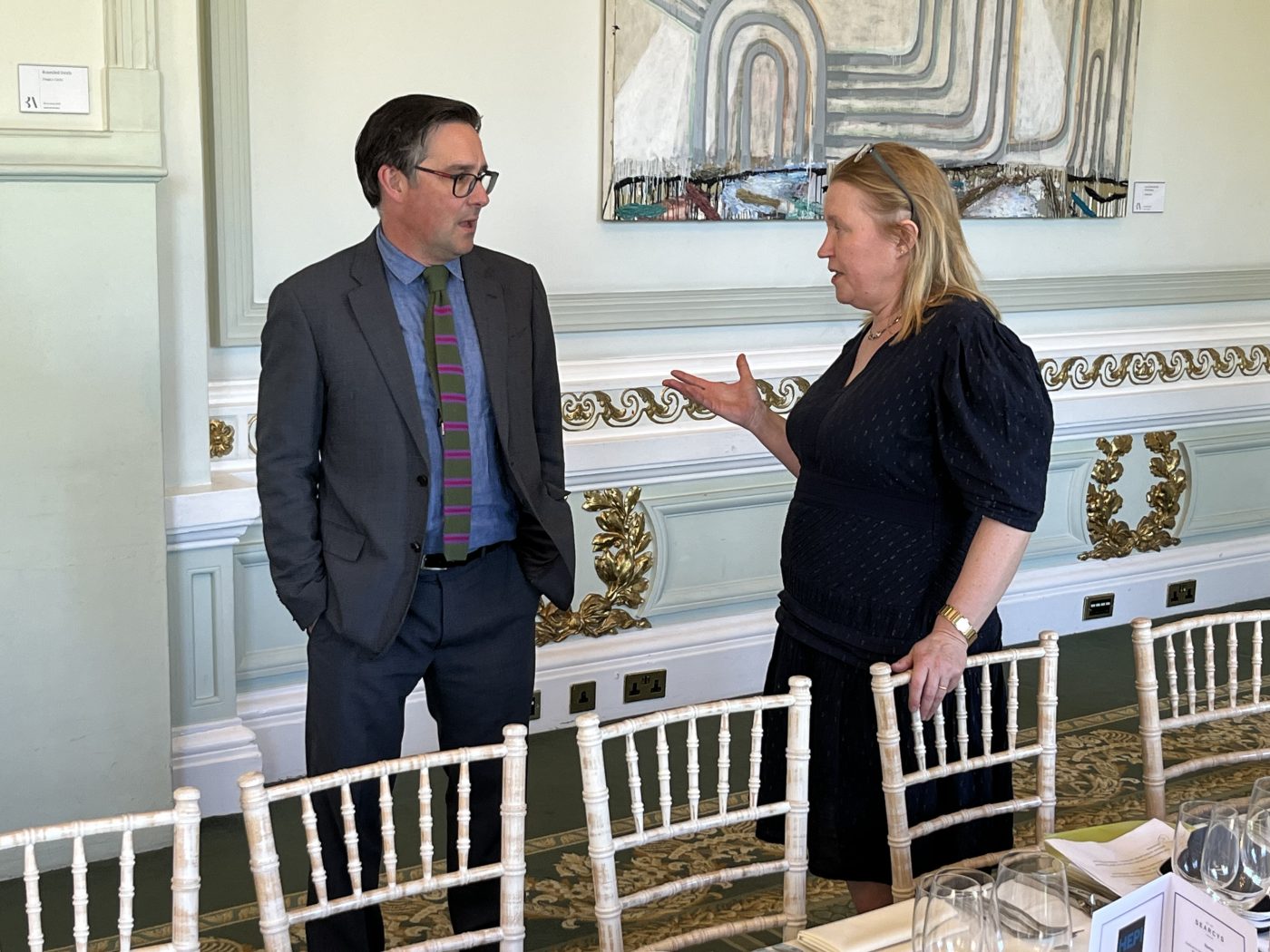
This blog reflects discussions at a UPP Foundation roundtable dinner held to mark the publication of Professor William Whyte’s report, Moving Away? The Past and Future of Student Accommodation – a report commissioned by the UPP Foundation and published by the Higher Education Policy Institute (HEPI).
Living away from home has never simply been about having somewhere to sleep. It is about becoming part of an academic community. It is the conversations after lectures, joining societies, making friends from different backgrounds, attending evening events, studying together, building professional networks and developing independence. These experiences are difficult to timetable, but they have long been considered integral to university life.
It is perhaps no surprise, therefore, that the overwhelming majority of prospective students still aspire to experience residential university life. Yet the discussion at our recent UPP Foundation-supported roundtable suggested that the debate has become more nuanced than a simple question of whether students move away from home.
Professor William Whyte’s report reminds us that the residential university experience has always evolved alongside society. Today’s universities continue that tradition, rethinking not only accommodation itself but the wider campus experience that surrounds it.

One of the strongest themes emerging from the discussion was the extent to which universities are investing in residential environments that better reflect the needs of today’s students. Participants shared examples of campuses creating more inclusive, flexible and wellbeing-focused spaces—moving beyond traditional social models towards environments that support study, collaboration, community and student wellbeing. Residential life is increasingly being viewed not simply as accommodation, but as part of the wider educational experience.
Affordability nevertheless remains an important consideration. Many students who aspire to the residential experience face significant financial pressures, with some balancing employment alongside full-time study. The discussion recognised that this can affect students’ ability to participate fully in university life, even when they are living away from home.
However, participants also noted that the picture is more complex than affordability alone. Several observed that demand remains particularly strong for en-suite and studio accommodation, while lower-cost options can sometimes prove harder to fill. This suggests that students are making choices based on a range of factors—including privacy, wellbeing and the overall residential experience—as well as price.

The conversation also reinforced that there is no single model of higher education that will suit every learner. Institutions such as the Open University demonstrate the enormous value of flexible and distance learning, while many students actively choose to commute because of family commitments, caring responsibilities or personal preference. The challenge is not to champion one model over another, but to ensure students have genuine opportunities to choose the experience that best meets their needs and aspirations.
Several contributors also reflected on the potential relationship between residential life and wider student outcomes. While evidence continues to develop, participants discussed how students living within university communities may benefit from easier access to academic support, wellbeing services, peer networks and opportunities to engage more fully with campus life. These observations reinforce the need for further research into how different residential environments influence belonging, continuation and student success.
One particularly interesting discussion considered the implications of artificial intelligence. As AI increasingly changes how knowledge is accessed and information is delivered, participants reflected that the uniquely human aspects of university may become even more valuable. Learning alongside others, debating ideas, building friendships, developing independence and becoming part of a community are experiences that technology cannot easily replicate.

Yet, as Professor Whyte observes in his report, there remain significant gaps in our evidence base. We still know surprisingly little about which residential environments deliver the strongest outcomes for belonging, wellbeing and academic success, or how different accommodation models shape students’ experiences over time.
Perhaps the most important conclusion from the evening was that the debate should not be framed as residential versus commuter students. Rather, it should focus on understanding the distinctive contribution different models of higher education make, ensuring that students have meaningful choices, and continuing to invest in the environments that help them thrive.
If residential university life offers educational value beyond accommodation itself—and the discussion strongly suggested that it does—then the challenge for the sector is to continue demonstrating, evolving and widening access to that experience, while recognising that excellent higher education can take many different forms.