By Claire Lea, Sustainability Manager, University of Lincoln
This blog from the University of Lincoln is the first in a series of two reflecting on their UPP Foundation funded project creating a student-led biodiversity app.
In 2022, the University of Lincoln embarked on creating a web-app, that uses AI technology to understand and enhance ecosystem services and habitat connectivity across Lincolnshire – funded by the UPP Foundation.
This exciting project created opportunities, particularly for our Computer Science students, to develop their knowledge and skills, working on a real-life project with academics – producing an output for the community to use.
At that time, we were creating a Biodiversity Action Plan for campus and we wanted citizen scientists to engage in and collaborate on creating the plan. We hoped the development of a web app would support this, enabling people to identify plant species around campus and for people to engage in nature.
Project Inception
Our first step was to recruit students to create the app. Working with students is always inspiring – they are full of ideas and challenge current thinking. A key learning point for those involved was learning to manage project work alongside their academic studies and, for many, part‑time employment. This undoubtably developed employability skills and prepared students for future professional roles.
One of the students, Jacob Swindell said of his experience of working on the project:
“I really enjoyed my time…working on the project [from] its inception as a junior developer…We were given a lot of control over the direction, features, and architecture of the application. Eventually, I took on a senior developer role and guided other students who each added their own ideas and contributions to the quality of the app. It was the first large-scale software project I worked on and taught me a lot about software architecture design, managing junior developers and working with the project leads to help build something we could all be proud of.”
Once we had a team of people, we needed to identify a data source for the app for plant identification and quite quickly decided to power iBiodiversity by Pl@ntNet.
Work began on creating the app; initially with the team’s ideas about the design and functionality of the app, with input feedback from the development and wider team. The development team created a landing page for the web app and decisions on the ‘back office’ elements such as hosting and storage before testing began.
Ready to launch
iBiodiversity (LNCN.AC/iBio) is a student-built web application that empowers users to explore and identify the plants around them, using their smartphone camera. More than just a plant identification tool, the app offers a comprehensive, all-in-one platform for nature discovery by combining species identification with geospatial data, biodiversity mapping and environmental insights.
By integrating real-time species logging with flood risk and carbon storage maps, iBiodiversity promotes nature literacy, supports citizen science participation and makes ecological data accessible to everyone, from researchers and academics to naturalists and everyday users. The web app demonstrates how digital innovation, and AI can meaningfully support environmental education and action in Lincolnshire and beyond.
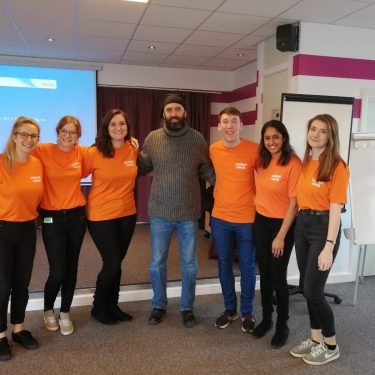
Following the beta launch of the web app, Student Biodiversity Engagement Coordinators were recruited to help us promote the app, develop user guides, and provide feedback.
One of these students, Georgie Fletcher, (an MSc Biodiversity, Conservation and Nature Recovery Student) said:
“The project was a joy to work on during my MSc year and it was such a wonderful experience. I had the opportunity to take part in group brainstorming, app testing, presenting, organising launch events, creating reports and spend time working with some incredibly talented students. Not only that, but being able to contribute meaningfully to biodiversity at my university, and the city I call home, is a real privilege and I am so grateful to have taken part in the project.”
Sharing iBiodiversity with the community
iBiodiversity app was launched at the University’s BioBlitz in 2025. Led by University of Lincoln Students, this event provided the perfect platform to launch the app to both the university and the wider community, while gathering feedback on functionality, accessibility and future development.
In March 2026 we concluded the project with four nature-based workshops, delivered by the Lincolnshire Wildlife Trust. The aim of the workshops was to engage staff, students and members of the community in a practical nature-based activity and to introduce them to iBiodiversity.
Sue Fysh, Senior Community Officer at the Wildlife Trust said:
“Having been involved in the Bioblitz last year when the iBiodiversity App was first trialled, we were pleased to be asked by Claire to run some workshops designed to inspire people to use the app.”
She added:
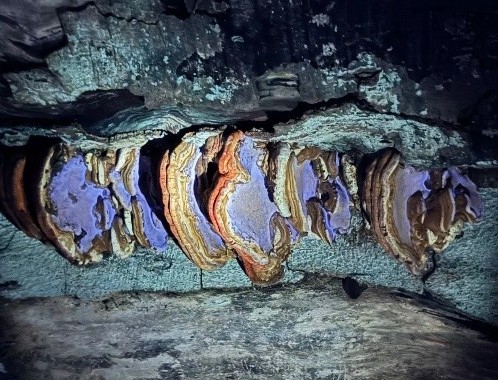
“It was a privilege to be asked to deliver a series of workshops highlighting the iBiodiversity App. The UV Torch Safari at the Riseholme Campus was well received and a range of different fungi, mammal trails and invertebrates biofluoresced in unexpected ways. The park at Riseholme is a perfect place for Winter Twig Identification as there is a good selection of both native and non-native trees there. The Owl Pellet workshop was fascinating – you could hear a pin drop whilst participants concentrated on dissecting their pellets and identifying the small mammal bones within. The Minibeast Hotel and Wild Art session was an ideal platform for sharing information about the importance of solitary bees and other minibeasts. The identification of pressed autumn leaves was central to the wild art element. All workshops provided the opportunity to share information about the iBiodiversity app and encouraged participants to log their findings on the platform.”
To access iBiodiversity visit LNCN.AC/iBio .
Next week we’ll publish the second in this series of blogs, looking at the wildflower project the University of Lincoln has undertaken to enhance and elevate the iBiodiversity app.
Did you know … UPP, UPP Foundation’s corporate parent, has long been committed to environmental sustainability as demonstrated in our recently-published Sustainability Report. Highlights from this year’s report include the news that UPP during the period 2024/25, UPP achieved a 2.8% biodiversity net gain, and 50% of all waste across its portfolio is now recycled. This year’s Earth Day was an opportunity to celebrate the significant success of UPP’s Recycling Incentive Fund which has resulted in recycling rates rising from 24% to nearly 50%, with plans to roll the initiative out across the portfolio. Back at the Foundation, this year we are supporting the University of Reading’s Outdoor Learning Garden that will provide a space for university students, school children and community groups to explore educational themes including biodiversity and climate change. The garden is due to open this summer.