By LaVince Ellis, Grounds Maintenance Assistant, UPP (University of Nottingham Broadgate Park)
My name is LaVince Ellis, and I am the Grounds Maintenance worker for the Broadgate Park location. I am originally from Bermuda, where I worked as a groundsman and landscaper, including time at the Bermuda Botanical Gardens.
Throughout my career, I have been fortunate to learn from many knowledgeable people and societies across Bermuda, including the Bermuda Rose Society, a Succulent Specialist, a Bonsai Expert, and through hands-on learning at the Botanical Gardens. These experiences have shaped my approach to horticulture and the way I enjoy sharing knowledge with others.
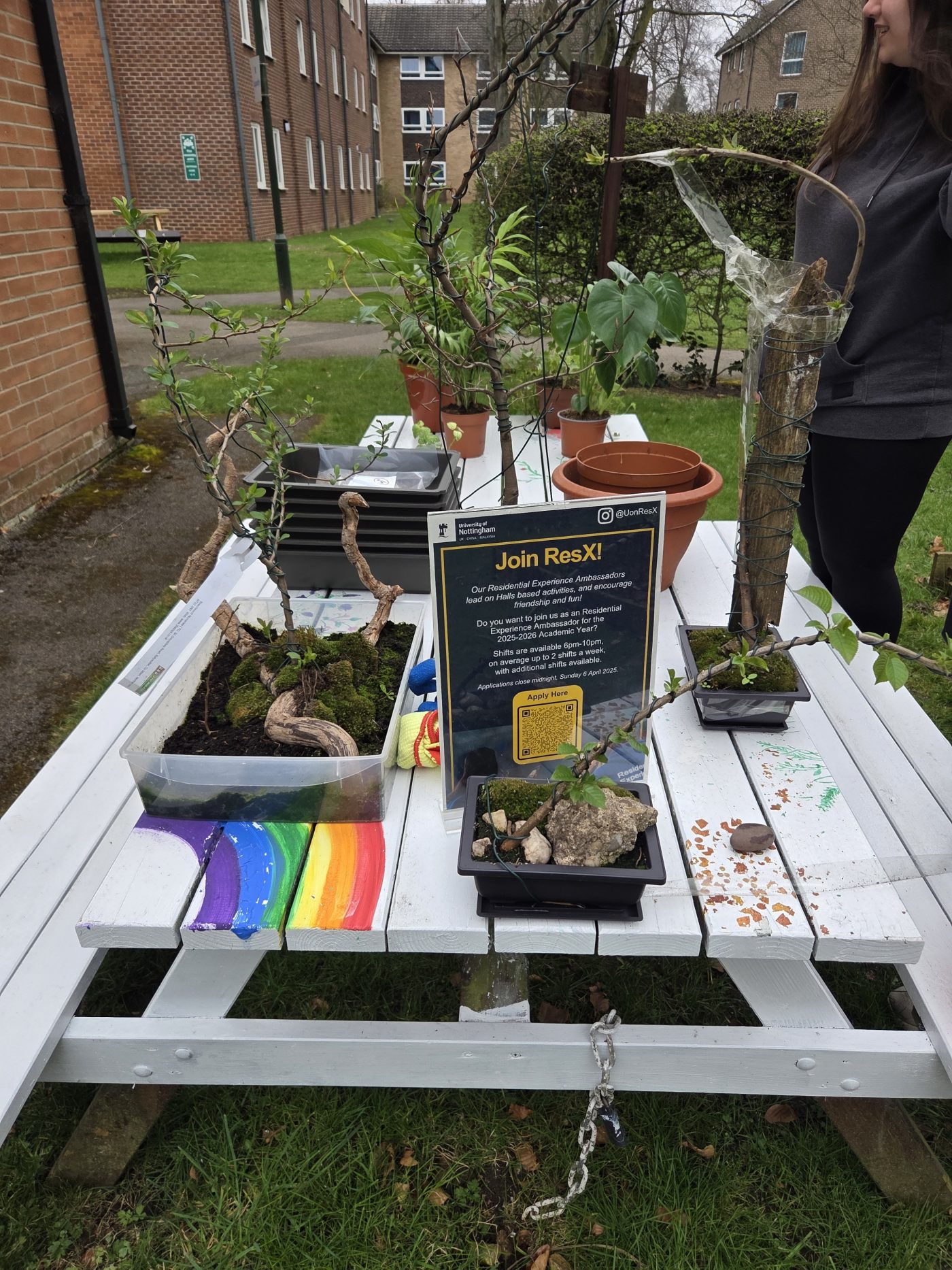
The ResEx Gardening Group
The Resident Experience (ResEx) Team works for the University of Nottingham and runs activities and events for students. The Gardening Group began around 2019, started by Amy or the ResEx Team and myself, with the original goal of saving the onsite allotment.
At the time, the allotment was at risk of being removed, as it wasn’t being used by students and there were plans for it to become a turfed seating area. This would have been a real shame, as the previous gardener had grown crops there. I approached the ResEx team to see if they would be interested in running a gardening group to bring the space back into use. Two weeks later, Amy got back to me with the good news that ResEx were happy to support and run the group.
The Gardening Group meets weekly for an hour, usually between 11am and 12pm, which has proven to be a good time for students. The day depends on ResEx staff availability. During the summer months, I also offer additional informal tutoring at weekends, if students request it.
Why I Wanted to Run the Group
Running this programme was my idea, with the backing and support of the University. For me, it wasn’t a difficult decision to undertake. Gardening and horticulture have given me so much over the years, largely because people were willing to share their expertise with me. This felt like a chance to give something back and pass that knowledge forward, just as it had been passed on to me.
It has also been rewarding to see how students respond to being part of the group. They take pride in it. One of the things that matters most to me is that the group is open to all University of Nottingham students, no matter where they live. It gives them a shared space, and over time you can see that sense of belonging grow—not just to the group, but to Broadgate Park as a whole.
What Students Learn
Within the group, students are introduced to a wide range of horticultural practices. This includes basic plant care and planting techniques, square foot gardening, electroculture, and creating bonsai.
When learning about plant care, students are taught how to identify pests and diseases and the correct ways to manage them. I also introduce natural herbicides and fertilisers, such as nettle water, seaweed extract, and horticultural vinegar. I am strongly opposed to the use of chemical “plant drugs” such as Miracle-Gro or Roundup, and instead encourage sustainable, environmentally responsible methods.
As the weeks go on, you can really see students growing in confidence. After about four or five sessions, they are encouraged to take plants back to their rooms and care for them independently. This is where the real learning happens. They begin to encounter pests and diseases first-hand, and by referring back to the notes from previous sessions, they are able to identify and manage issues themselves. It’s a simple step, but it helps build both knowledge and independence.
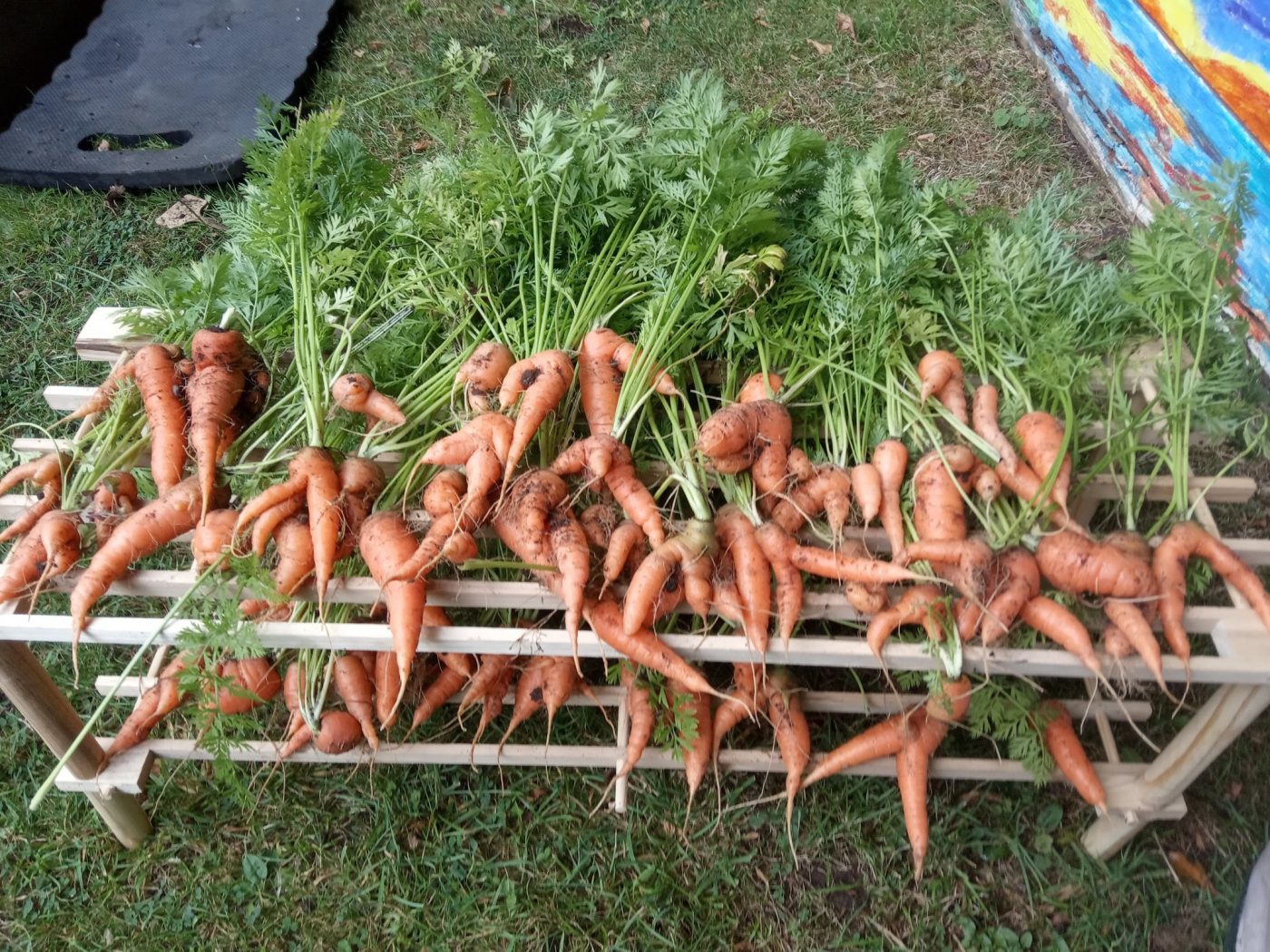
Students grow both vegetables and flowers, which are planted in the allotment and around the courtyard areas. All produce grown is freely accessible to any student or member of staff to pick. Students also receive seeds to begin growing plants in their rooms; once established, these are transplanted into the allotment.
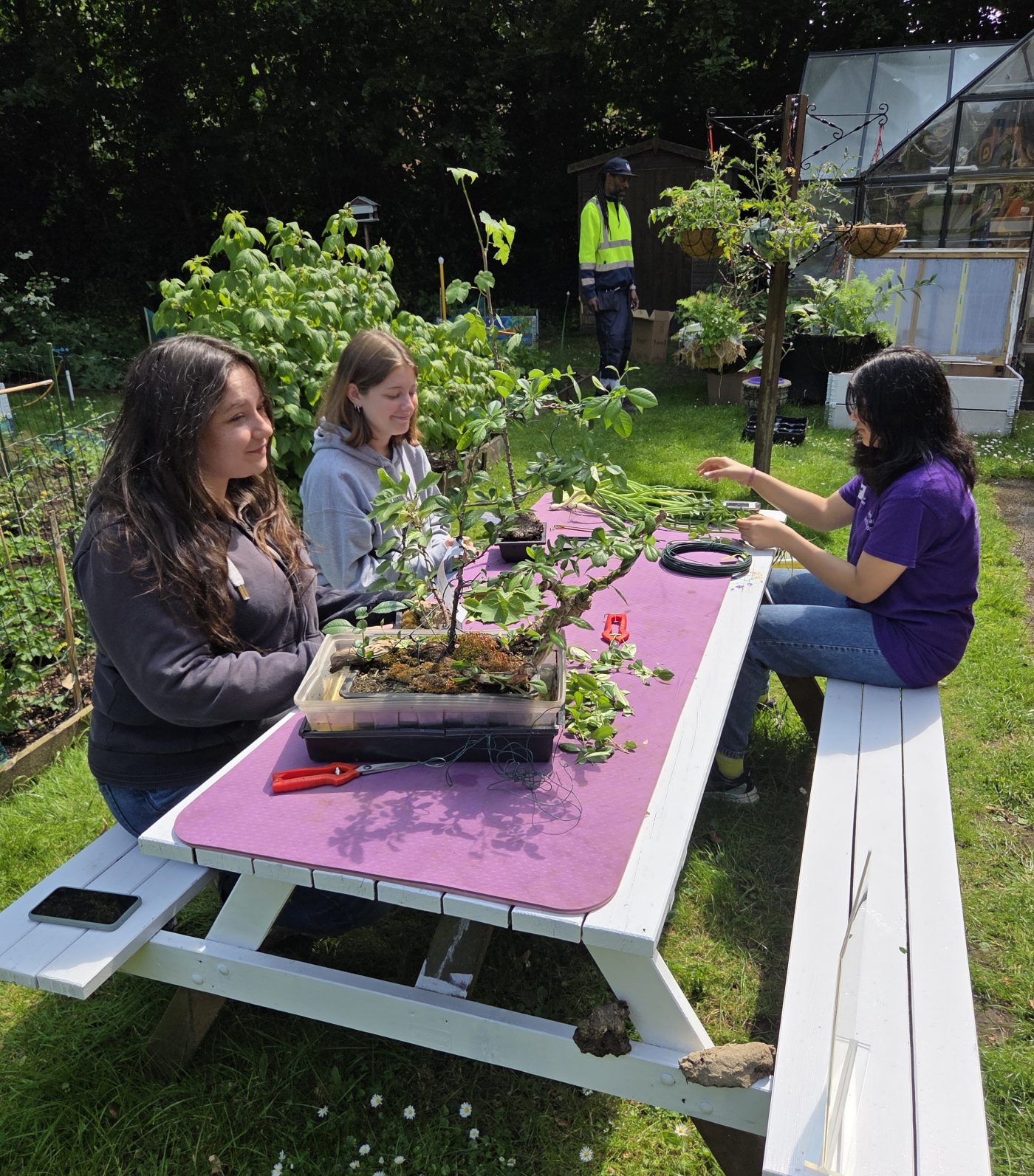
As many students come from urban backgrounds and have never had access to an allotment, I teach square foot gardening—a method of growing fruits and vegetables in small wooden or plastic boxes. One of the most popular activities with students is bonsai. The ResEx team provides the trays and plants, and students choose their plant and design their own bonsai style.
Seeing the Space Come to Life
We are now in our fourth year of running the group, with a pause during Covid. Students come from a wide range of backgrounds and countries, with weekly attendance ranging from one to twelve students.
For me, one of the most rewarding parts has been seeing how students now use and value the space. I am loving it. It is great to see the world’s future generation getting back to nature and learning how to grow for themselves. With so many chemicals being added to our food nowadays, having the skills to grow your own food—and eventually provide for your family—is richness beyond compare.